

Solutions to Today’s Data Center Construction Challenges

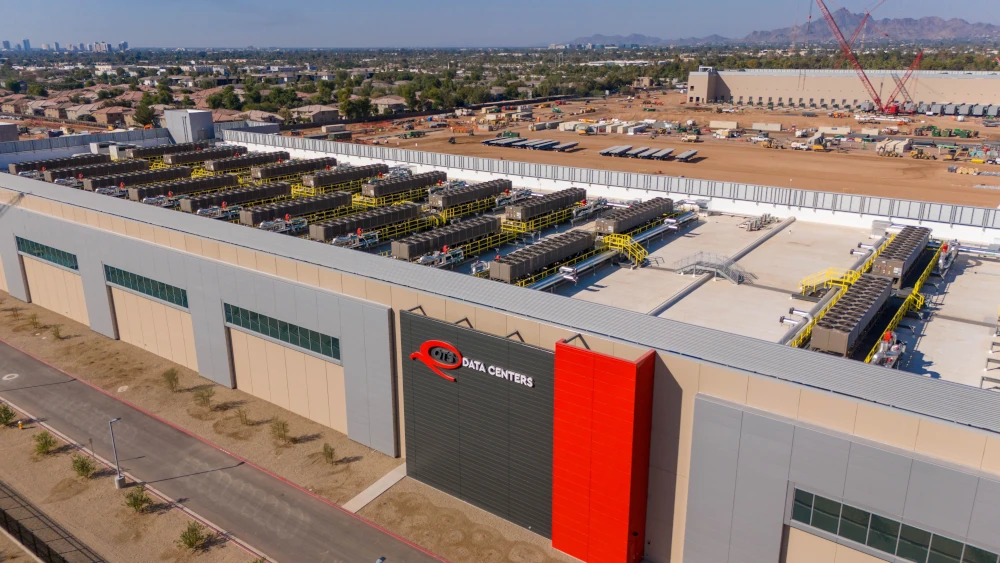
Data centers are among the most sophisticated structures in the world. They house complex infrastructure, such as servers, storage systems, and networking equipment, to securely process, store, and manage digital data for business operations and online services.
Designing, building, and managing these facilities is no small task. From hyperscale campuses to edge deployments, each data center type serves a unique purpose based on organizational needs, resources, and goals. Knowing the differences and the unique construction challenges that come with each is essential if you want to build infrastructure that’s reliable, scalable, and ready for the future.
Types of Data Centers
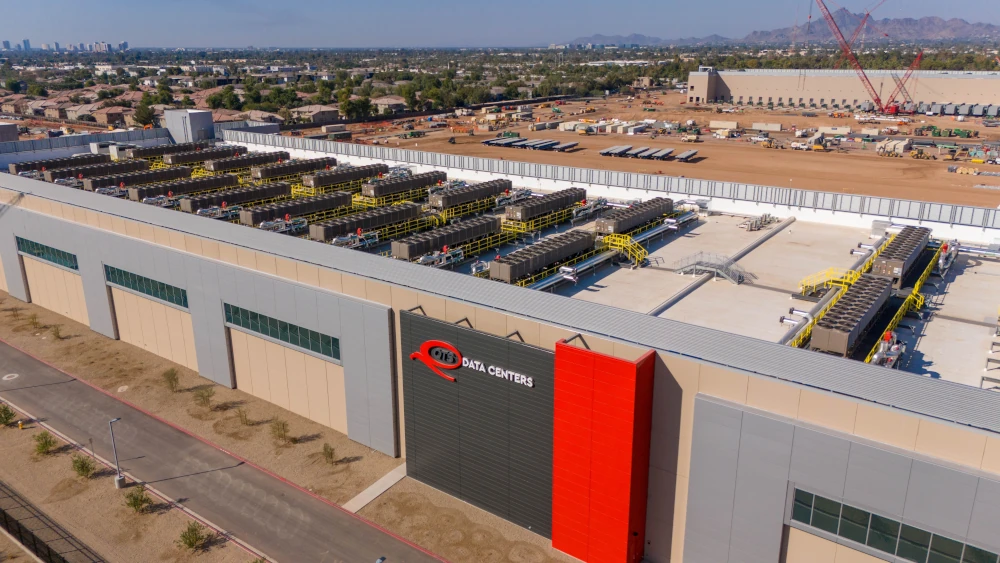
Data centers serve a different purpose depending on an organization’s needs, resources, and goals. The main types of data centers are enterprise, colocation, cloud, managed, hyperscale, and edge.
Enterprise Data Centers
Enterprise data centers are private facilities owned and operated by a single organization for its own IT operations. They provide complete control over data and infrastructure, but require significant investment in space, power, cooling, and maintenance. Enterprise data centers are ideal for companies with the resources to manage their own infrastructure, security, and network requirements.
Colocation Data Centers
In colocation data centers, multiple organizations rent space in a shared facility to house their IT equipment. The provider takes care of the building, security, power, and cooling, while each customer manages their own servers. This is a great option for businesses that want a reliable and scalable data center without the cost and complexity of building their own.
Cloud Data Centers
Cloud data centers are networks of data centers managed by cloud service providers like Amazon Web Services (AWS), Microsoft (Azure), and Google Cloud Platform (GCP). They offer on-demand access to computing resources and services over the internet, typically on a pay-as-you-go basis. Cloud data centers are options for organizations of all sizes looking for flexibility, scalability, and reduced hardware costs.
Managed Services Data Centers
In managed service data centers, a third-party provider manages a company’s IT operations within the facility. This includes maintenance, support, and other services, which can be either fully or partially managed. This model works well for companies that want to offload the day-to-day responsibilities of IT management, while still maintaining control over their data.
Hyperscale Data Centers
These are massive facilities designed to support thousands of servers, optimized for large-scale data storage and processing. Built by or for major cloud providers, hyperscale centers offer immense capacity and scalability. They’re best suited for large enterprises and cloud platforms that handle vast amounts of data and require high-performance infrastructure.
Edge Data Centers
Edge data centers are smaller facilities located close to end-users. By processing data locally, they reduce latency and boost performance, especially for applications like IoT, autonomous vehicles, and real-time analytics. If a company’s operations depend on fast response times and real-time processing, edge data centers would be a good option.
Data Center Opportunities and Challenges
According to a McKinsey & Company article, The data center balance: How US states can navigate the opportunities and challenges, “by 2030, companies will invest almost $7 trillion in capital expenditures on data center infrastructure globally. More than $4 trillion of it will go toward computing-hardware investments, with the balance going toward areas such as real estate and power infrastructure.”
About 70 percent of that projected 2030 demand will come from hyperscale, as they work on building large campuses to capture the value of colocation data centers, resulting in sites that often cover hundreds of acres.
Data centers are also emerging in remote locations due to the demand for power, land, and cooling, which are more available outside of major metropolitan areas. Remote sites offer lower costs, access to renewable energy sources like wind and hydroelectric power, and incentives from local governments.
McKinsey & Company predicts, “states that can effectively plan, manage, and mitigate the risks of data center growth stand to unlock millions of dollars in direct and indirect growth. At the same time, they can create high-paying jobs and establish themselves as leading digital-infrastructure hubs.”
Data Center Construction Challenges
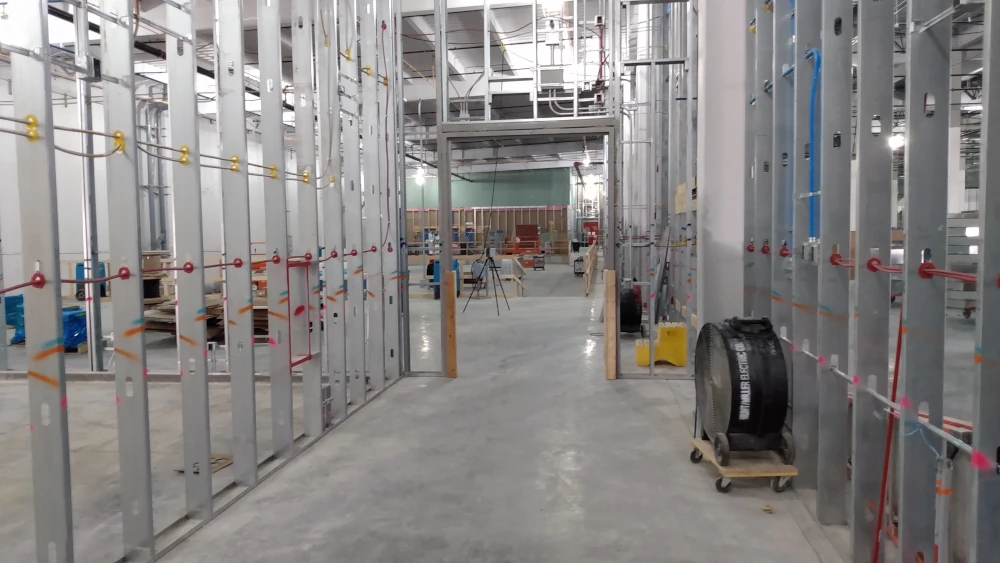
The construction of data centers demands precision, efficiency, and coordination. With millions of square feet of critical infrastructure housing thousands of servers, networking equipment, and cooling systems, even minor construction errors can lead to costly delays and operational inefficiencies.
Here are some of the challenges for data centers during new construction, expansion, retrofit, and facility management.
- Aggressive Timelines: Tight schedules are pressuring data centers to complete construction quickly, without compromising quality or safety.
- Retrofitting Existing Structures: Older buildings may have structural limitations such as low ceilings and insufficient floor loading capacity.
- Complex MEP Integration: MEP system updates, such as HVAC systems, cooling infrastructure, power distribution, and fire suppression, can be difficult to incorporate into existing infrastructure.
- Specialized Technology: Planning for server infrastructure, generators, chillers, and switchgear is essential to ensure continuous uptime and operational reliability.
- Subcontractor Coordination: Managing multiple trades requires precise sequencing and communication to avoid clashes and delays, plus ensure the facility meets technical and operational requirements.
- Regulatory Compliance: Meeting local, national, and industry-specific codes demands thorough documentation and regular inspections.
Thank you for reading this excerpt. Read the full article to learn more about how GPRS' services supports data center projects.
Over the past 27 years, Existing Conditions has measured, documented, and modeled over 10,000 buildings spanning over 700 million square feet across the United States, establishing ourselves as an industry leader in reality capture. Architects, builders, engineers, developers, and facility managers trust us to deliver digital representations of the as-built environment with unparalleled accuracy and efficiency. Our services, including 3D laser scanning, 3D photogrammetry, and BIM modeling Visualize The Built World® to enable architects to make informed design decisions based on the most accurate data available.


